

SCSN
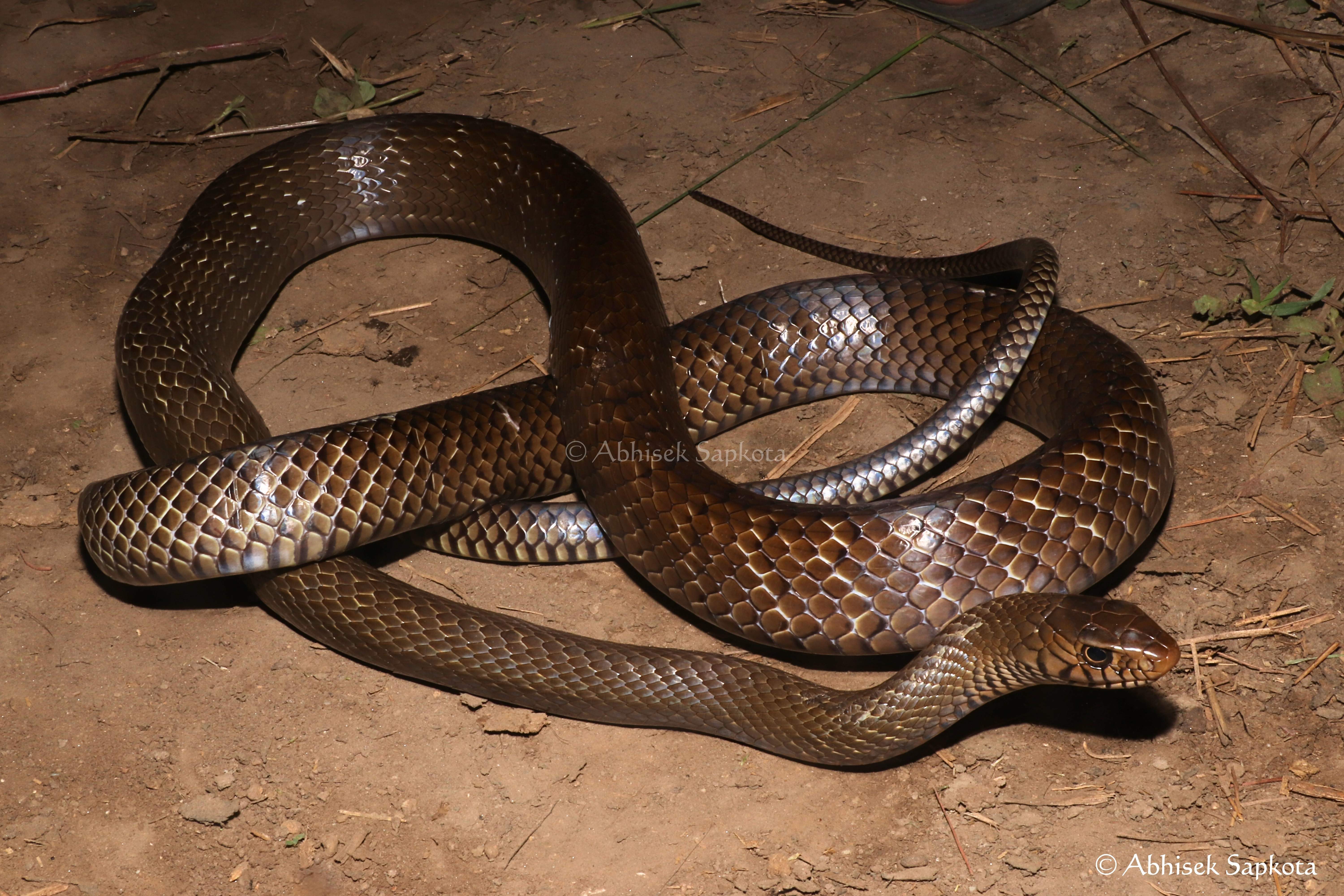
Common Rat snake
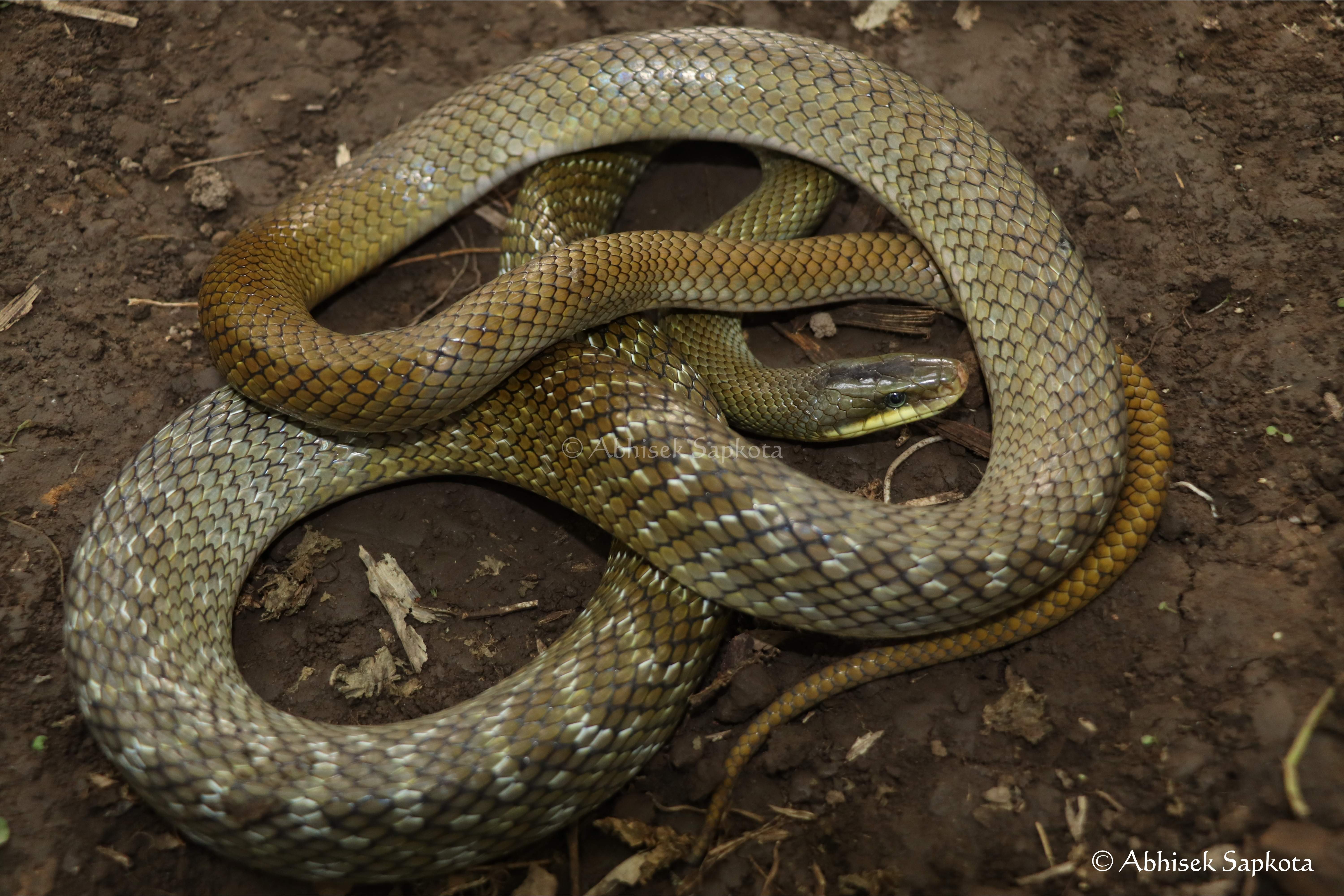
The Common Rat Snake is locally known as 'Dhaman' in the Nepali language, characterized by a long, slender body with dark stripes between its scales, a scaly head, and is recognized for its quick movements. It closely resembles many snakes commonly seen in the region. Depending on the season, its color may vary from brown to black or even golden. This species is found in 16 countries across Asia, including Nepal. In Nepal, rat snakes are very common in the lowland Terai and mid-hill districts. One of the largest non-venomous snakes in Nepal, the Common Rat Snake is often found in farms, forests, and even houses. It is a quick snake that eats rats, birds, and lizards. It sometimes raises its head and hisses like a cobra, but it is not venomous and is actually very helpful to farmers.
It is diurnal (active during the day), terrestrial, and an excellent climber—able to scale trees, walls, and thatched roofs with ease. It can also swim well with its head above the water surface. It is an extremely skilled predator of rats. It commonly resides near human settlements near settlement, agricultural land, firewood stacks, holes, and forests. By preying on rodents that damage crops, it helps protect farmers’ produce. It also eats other snakes, lizards, shrews, birds of prey such as owls, and thus plays a significant role in maintaining ecological balance. By controlling rodent populations, it also reduces the risk of rodent-borne diseases in humans.

Brahminy blind snake
It is the smallest snake species of Nepal. This tiny snake looks like an earthworm and is often found in gardens and wet soil. It is blind, harmless, and feeds on ants and termites. It is unique because it doesn’t need a male to reproduce. Although common, it often goes unnoticed.

Common Wolf Snake
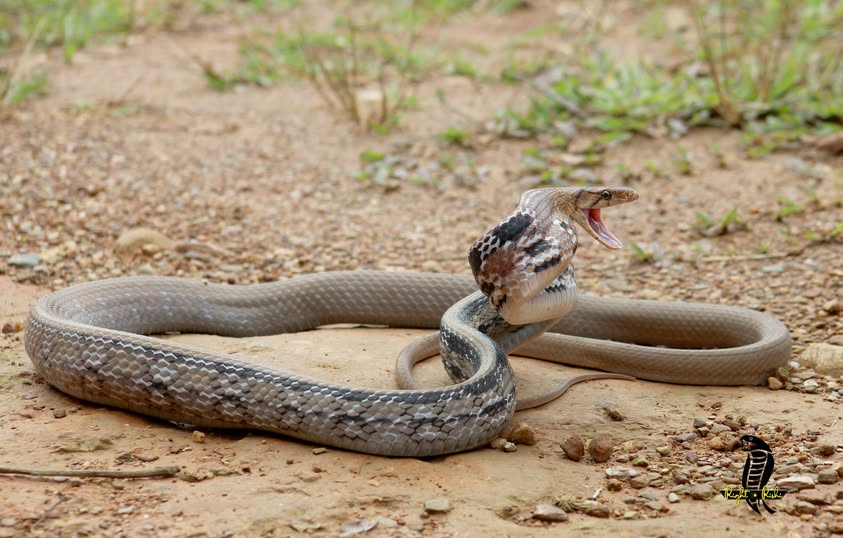
The Common Wolf Snake, is a non-venomous snake found in South and Southeast Asia. It is thin, yellow-banded on brownish body that often lives near houses and is active at night. It feeds on lizards, geckos, and small animals. People sometimes confuse it with kraits, but it is non-venomous. It often enters homes in search of prey, i.e geckos, and is completely harmless.
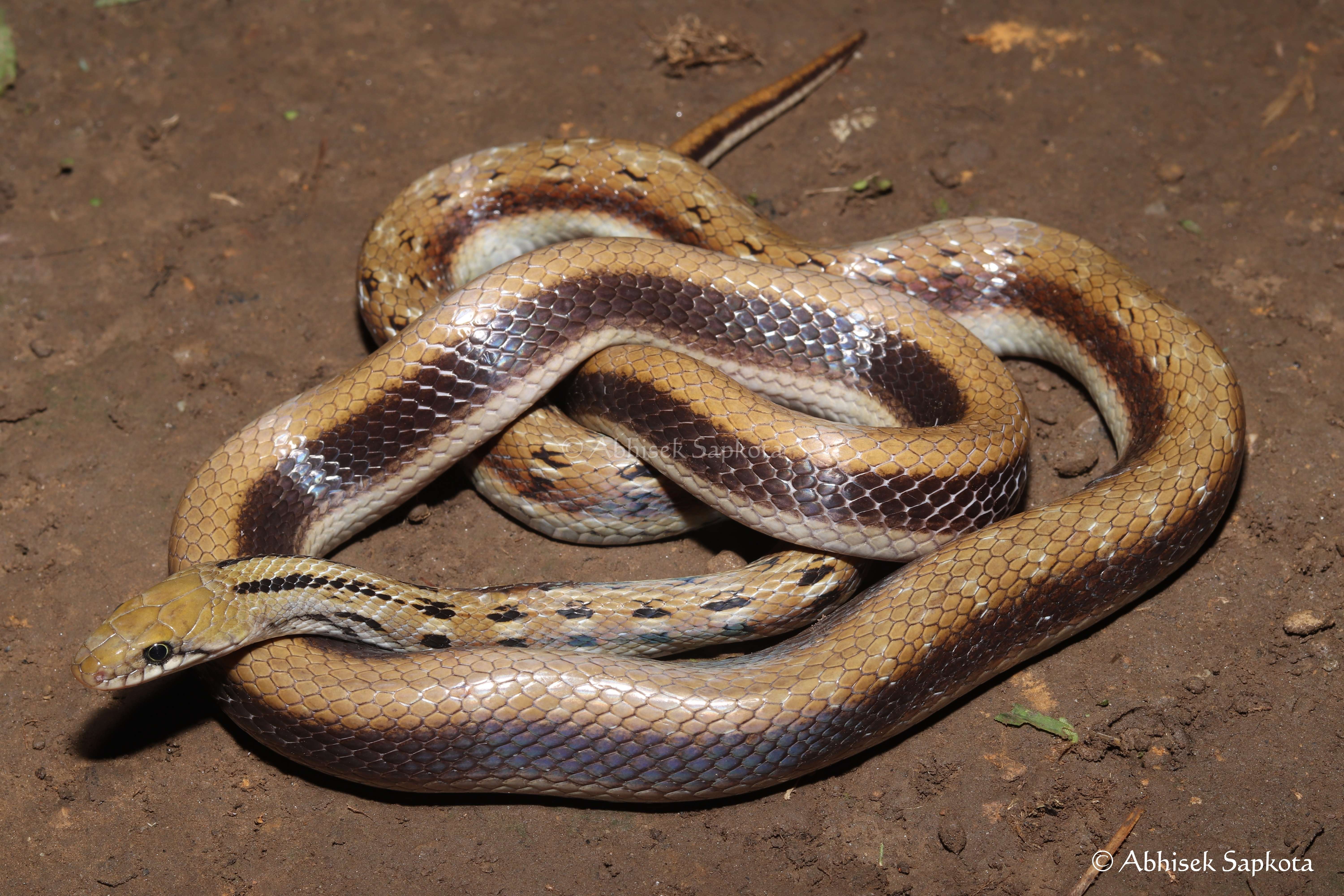
Common Trinket Snake
Common Trinket, is a non-venomous snake that is frequently encountered around human settlements. It helps to control the population of small rodents, reptiles and frogs.
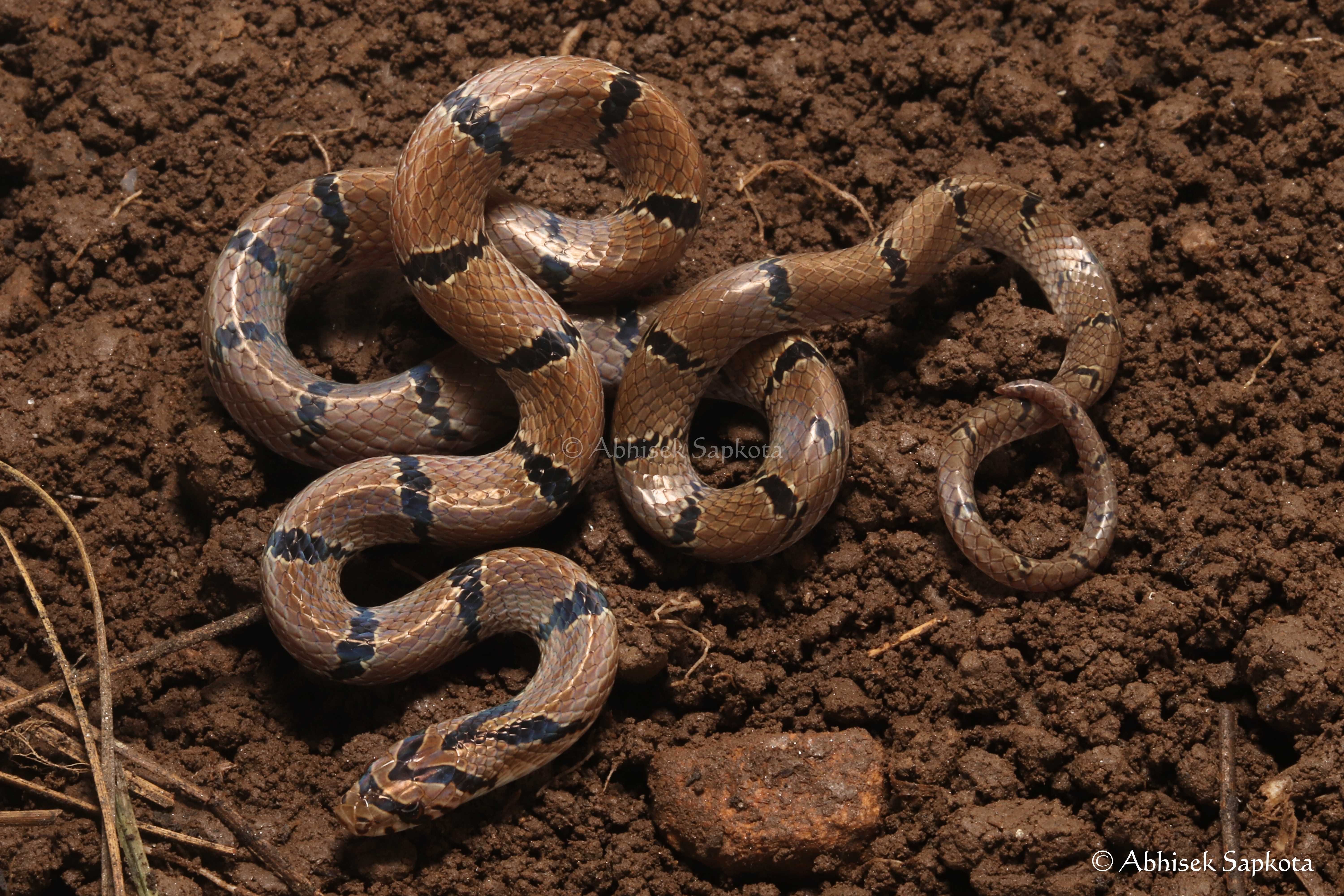
Common Kukri / साँखड सर्प
Common Kukri is named after the Khukuri- a sharp Nepali weapon due to its shaped teeth that are used to cut open reptile eggs, which are its main food. It is found in both natural and human areas and is active at night. It is ofetn killed by people assuming it as venomous Krait species. It hides under leaves and stones and is not dangerous to people.
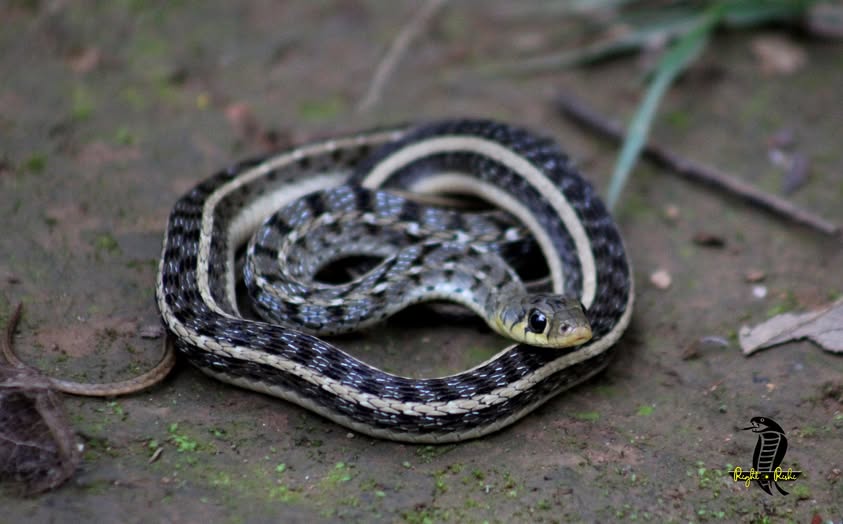
Buff-striped Keelback
This is a non-venomous snake found around settlement area, agricultural land and near water sources.
Himalayan Trinket
This is a non-venomous snake found in mid-hills and mountain region of Nepal that preys on small rodents and reptiles.
Copperheaded Trinket
Coperheaded Trinket, is a non-venomous snake that is frequently encountered around human settlements. It helps to control the population of small rodents, reptiles, and frogs. It is differentiated from Common Trinket by the 3 lines running through the eyes.
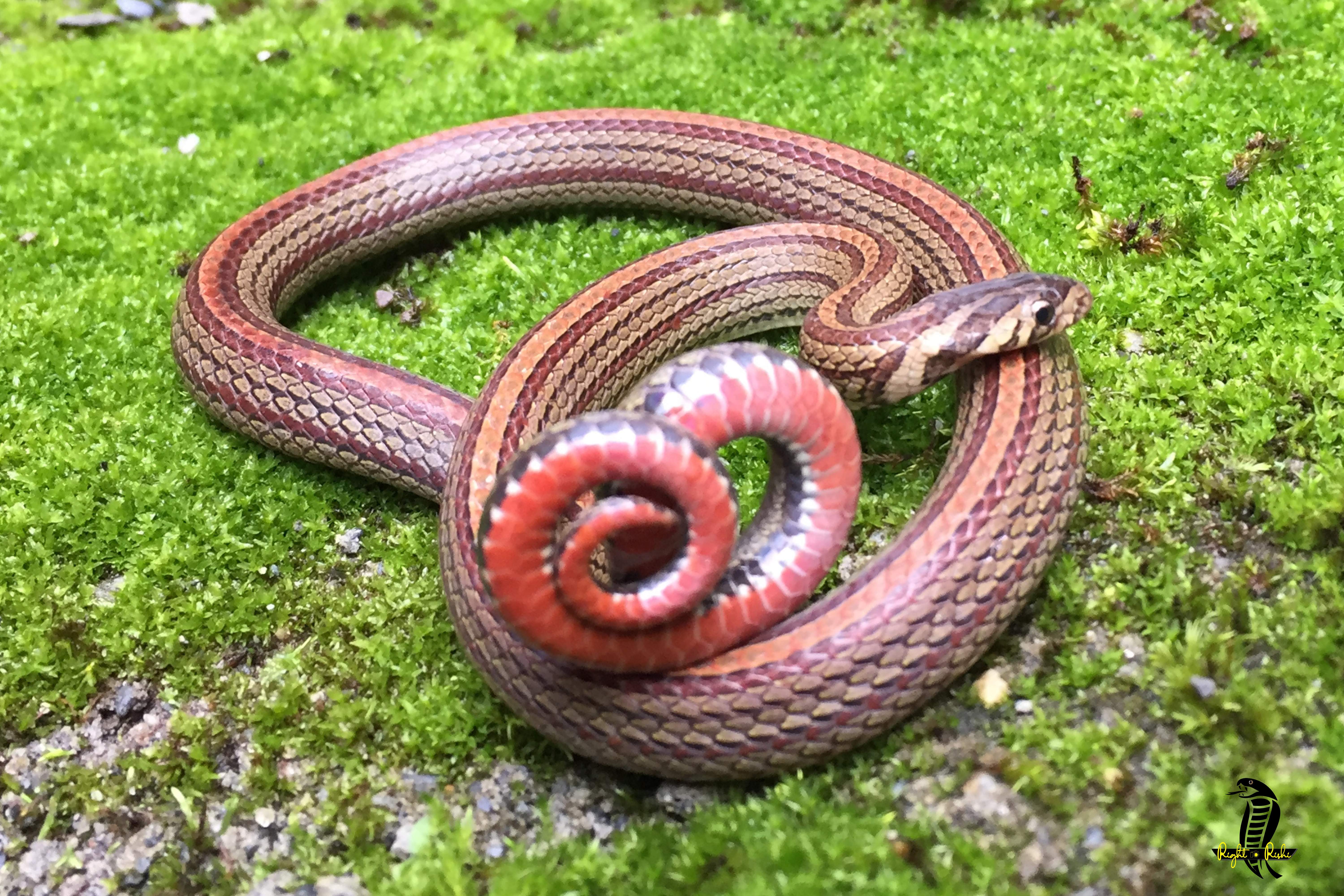
Nagarkot Kukri
This is a non-venomous shy snake which is rarely seen in Nepal due to habitat loss.
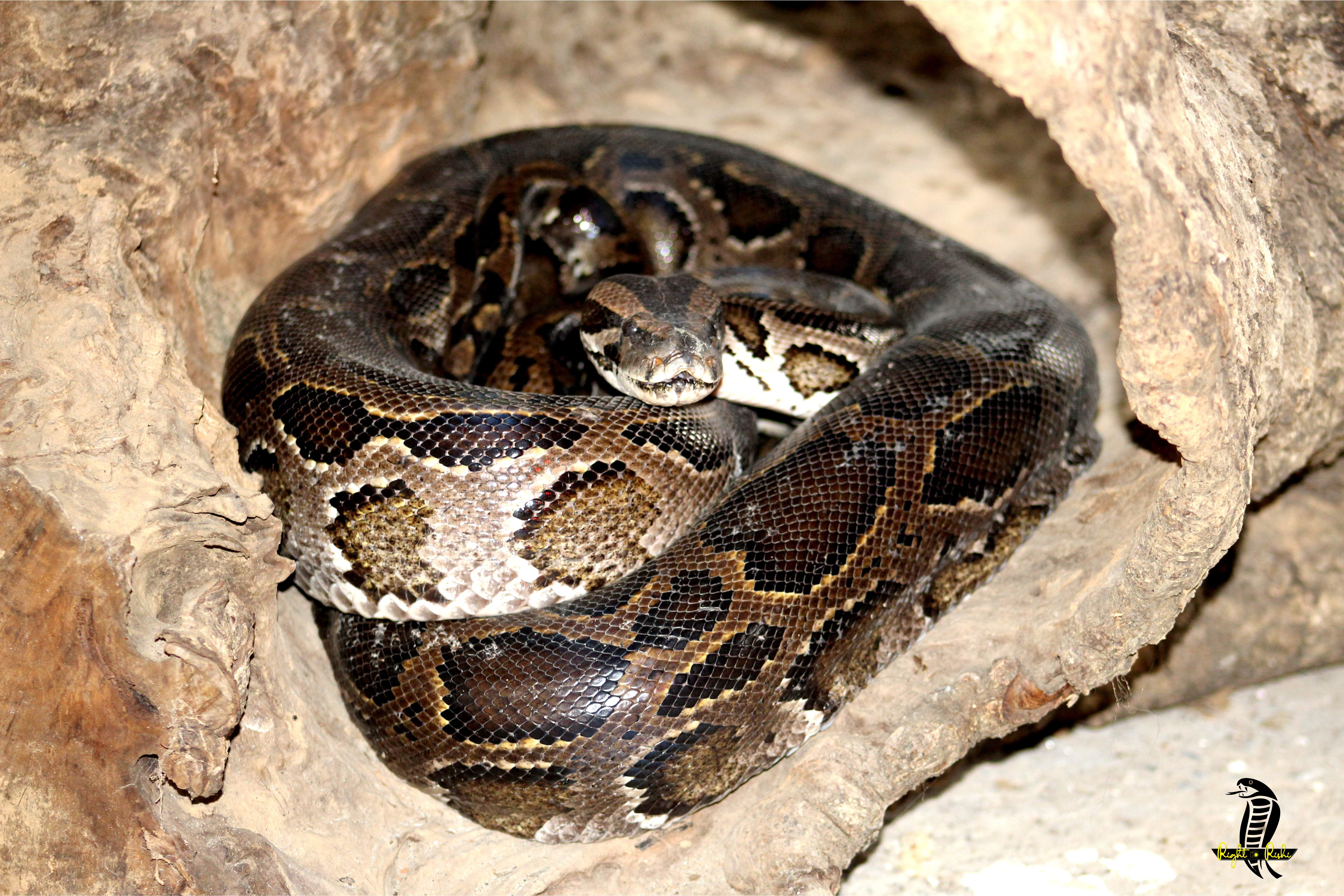
Burmese Python
This is a large-bodied snake that is mostly found in the low mid-hill region and the Terai region of Nepal.