

SCSN
Snake Information
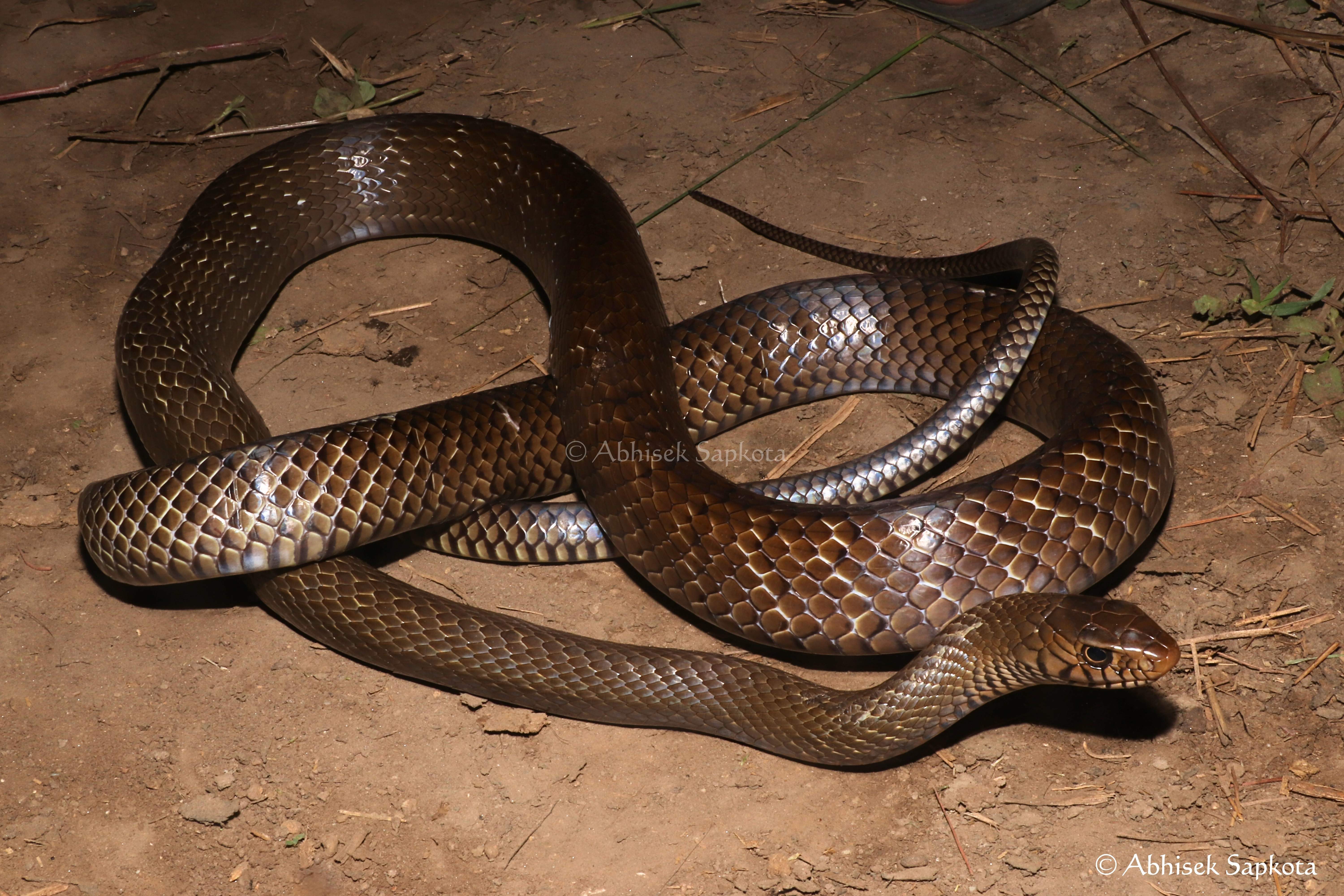
Common Rat snake
NON-VENOMOUS
The Common Rat Snake is locally known as 'Dhaman' in the Nepali language, characterized by a long, slender body with dark stripes between its scales, a scaly head, and is recognized for its quick movements. It closely resembles many snakes commonly seen in the region. Depending on the season, its color may vary from brown to black or even golden. This species is found in 16 countries across Asia, including Nepal. In Nepal, rat snakes are very common in the lowland Terai and mid-hill districts. One of the largest non-venomous snakes in Nepal, the Common Rat Snake is often found in farms, forests, and even houses. It is a quick snake that eats rats, birds, and lizards. It sometimes raises its head and hisses like a cobra, but it is not venomous and is actually very helpful to farmers.
It is diurnal (active during the day), terrestrial, and an excellent climber—able to scale trees, walls, and thatched roofs with ease. It can also swim well with its head above the water surface. It is an extremely skilled predator of rats. It commonly resides near human settlements near settlement, agricultural land, firewood stacks, holes, and forests. By preying on rodents that damage crops, it helps protect farmers’ produce. It also eats other snakes, lizards, shrews, birds of prey such as owls, and thus plays a significant role in maintaining ecological balance. By controlling rodent populations, it also reduces the risk of rodent-borne diseases in humans.